Lumera
Unified Web3 Ecosystem for Blockchain Products
A Web3 ecosystem made human – website, crypto wallet, NFT product, and developer hub on one design system.
Competitors
My Role
Lead Product Designer – UX, brand evolution, system
Industry
Blockchain · Web3 · Fintech
Deliverables
Brand evolution, website, crypto wallet, NFT product UX, design system
Lumera is a Layer-1 blockchain focused on certified authenticity, permanent storage, and minimal fees for NFTs and Web3 applications. The platform encompasses several products – Sense (provenance), Cascade (storage), Wallet, and a developer hub.
Before the rebrand, the products were fragmented: separate visual systems, inconsistent terminology, and a UX that assumed Web3 fluency from anyone who walked in. The job was to define one digital identity, one design system, and one interaction model across the entire ecosystem – and translate complex blockchain mechanics into something a non-expert could read in seconds.
Keywords:
– Web3 · Fintech
– Multi-product ecosystem
– Design system
– System-level interaction models
– Complexity reduction
– Developer UX
The challenge
Four products, four mental models, one user. Crypto interactions are inherently dense – gas, multi-chain, signing, custody – and most platforms cope by exposing all of it. The opportunity was to define a system that honours complexity for power users (developers, traders) but keeps it invisible by default to newcomers. That meant treating Lumera as a single product surface with shared interaction models for transactions, identity, and asset views.
My Role
I led UX and UI across the whole ecosystem – discovery, brand evolution, IA, design system, and product design for the wallet and the marketing site – partnering with the Lumera team, developer relations, and the engineering leads on Sense and Cascade.
– Defined a unified user-flow vocabulary across products: minting, viewing, sending, staking, signing – one model, four contexts.
– Designed the Crypto Wallet UX with a focus on simplicity, security, and recoverability for users who had never held an asset before.
– Created Lumera Design Language – a component library and visual identity system used across every Lumera product.
– Architected the developer site and API documentation, growing developer engagement by 30%.
– Translated complex technical scenarios – gas estimation, cross-chain bridging, NFT proof-of- authenticity – into plain-language steps with safety checks.
– Drove brand evolution and integrated 3D, motion, and Web3-native visual cues without sacrificing readability or speed.
Impact
“Web3 doesn’t need to be intimidating. The complexity is real, but most of it belongs in the system, not in the user’s face. Our job is to design the moments where the user actually has to decide.”
Key Screens
Crypto wallet
- WalletConnect, QR login, multi-chain support
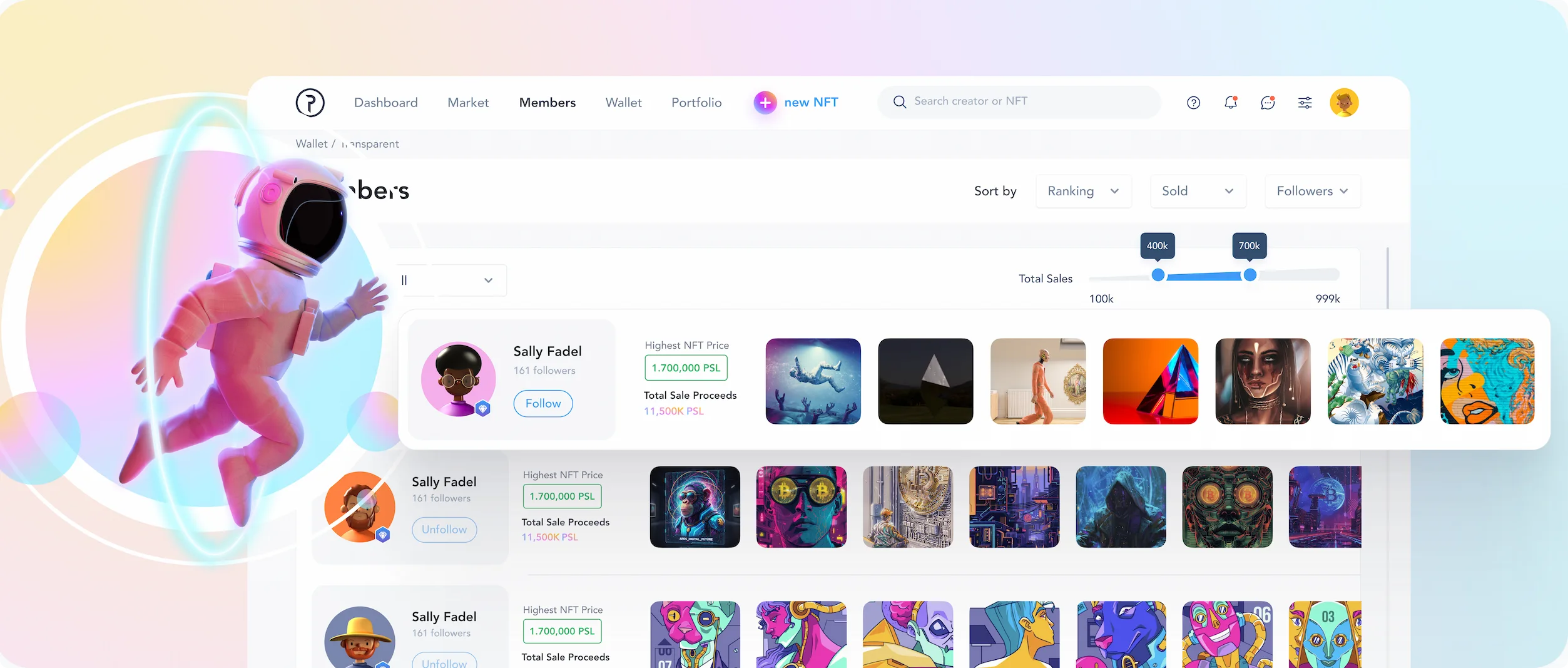
- NFT viewer with provenance via Sense
- Visual gas estimation (no jargon)
- Recoverable, modular UI for new chains
Goal: Make personalisation feel like designing, not configuring.
Lumera site + developer hub
- Product → Network → Developers → Community IA
- Integrated API documentation
- 3D visual identity with smooth motion
- Optimised Next.js delivery
Goal: Communicate technological depth without slowing the page.
Process
Discovery
Mapped the Web3 market and competitors (Polygon, Solana, Tezos), pulled pain points from real wallet and NFT users, and audited Sense and Cascade API interactions to understand where complexity was inherent vs. accidental.
Defining the interaction model
I committed to a single model for transactions across the whole ecosystem: a clear three-stage pattern – preview, confirm, broadcast – with consistent state and safety affordances. Every product reuses it.
Wallet & NFT product
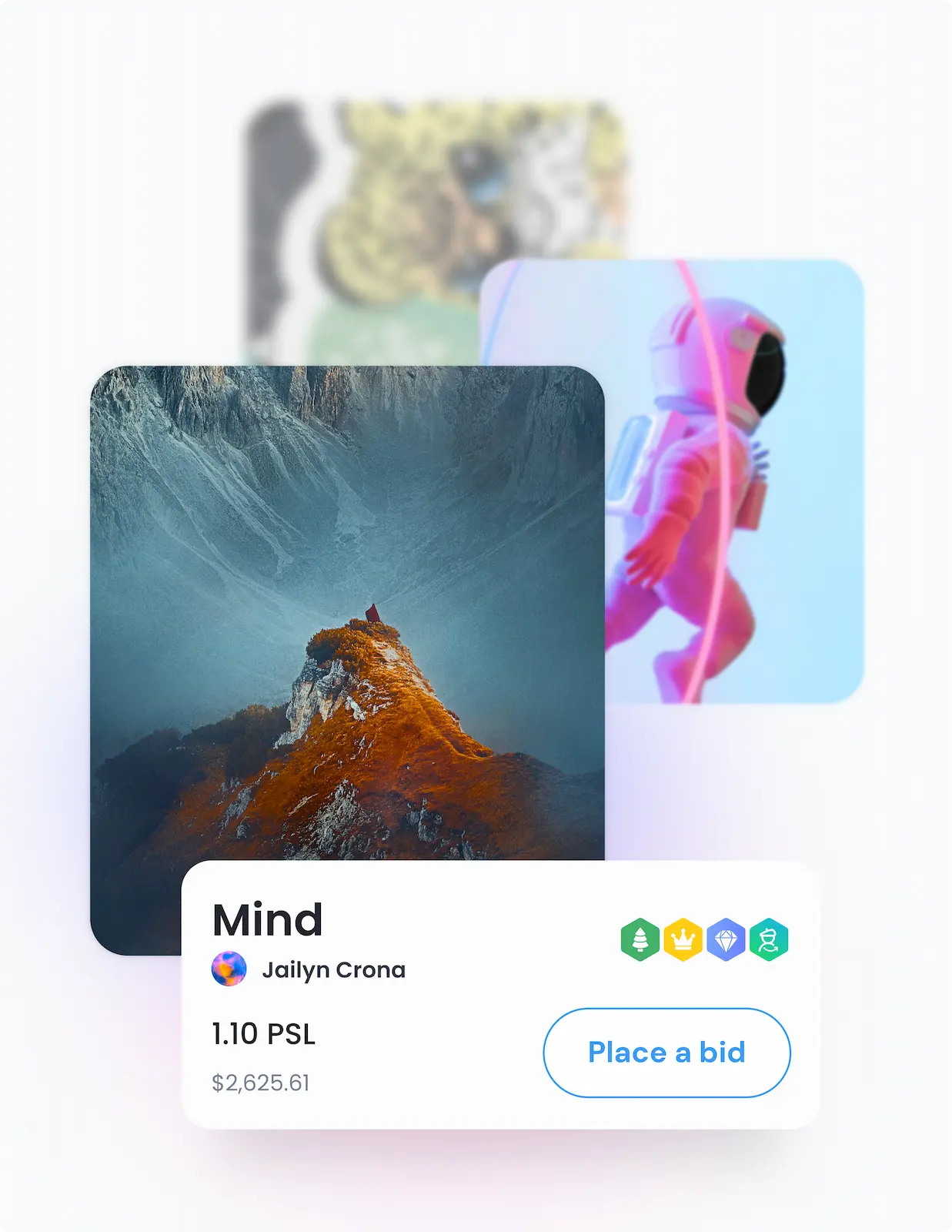
Designed the wallet around recoverability and safety. Clear visual metaphors for transactions, NFT viewing tied to Sense provenance, and a modular UI that adapts to new chains without re-skinning.
Design system
Lumera Design Language: component library, type system, soft Web3 gradients, and motion principles. One source of truth for every product surface, with detailed Dev Mode handover.
Brand & web
Brand evolution that conveys technological depth without coldness – 3D, motion, and Web3-native cues, measured against Lighthouse to guarantee performance.
Outcome & Reflection
Lumera now has a digital identity that reflects its technological depth and an interaction model legible to both developers and newcomers. The website and the wallet are linked by one system, and the architecture is ready for the next products in the ecosystem.
The lesson I take from this project: Web3 can be human. The work isn’t simplification – it’s deciding which complexity belongs to the user.