Xentral
AI-Powered ERP for Commerce Operations
Principal UX on an AI-powered ERP for 2,000+ businesses — designing the agent-first workflows that automate the back office.
My Role
Principal UX Designer (current) – previously Senior UX Designer · Product Design Consultant · 6+ years on the product
Industry
B2B SaaS · AI-powered ERP · Commerce operations
Deliverables
Xentral Flows Editor (agent-first AI workflows), onboarding & module training, multi-module table UX, design system, Term convention, investor materials
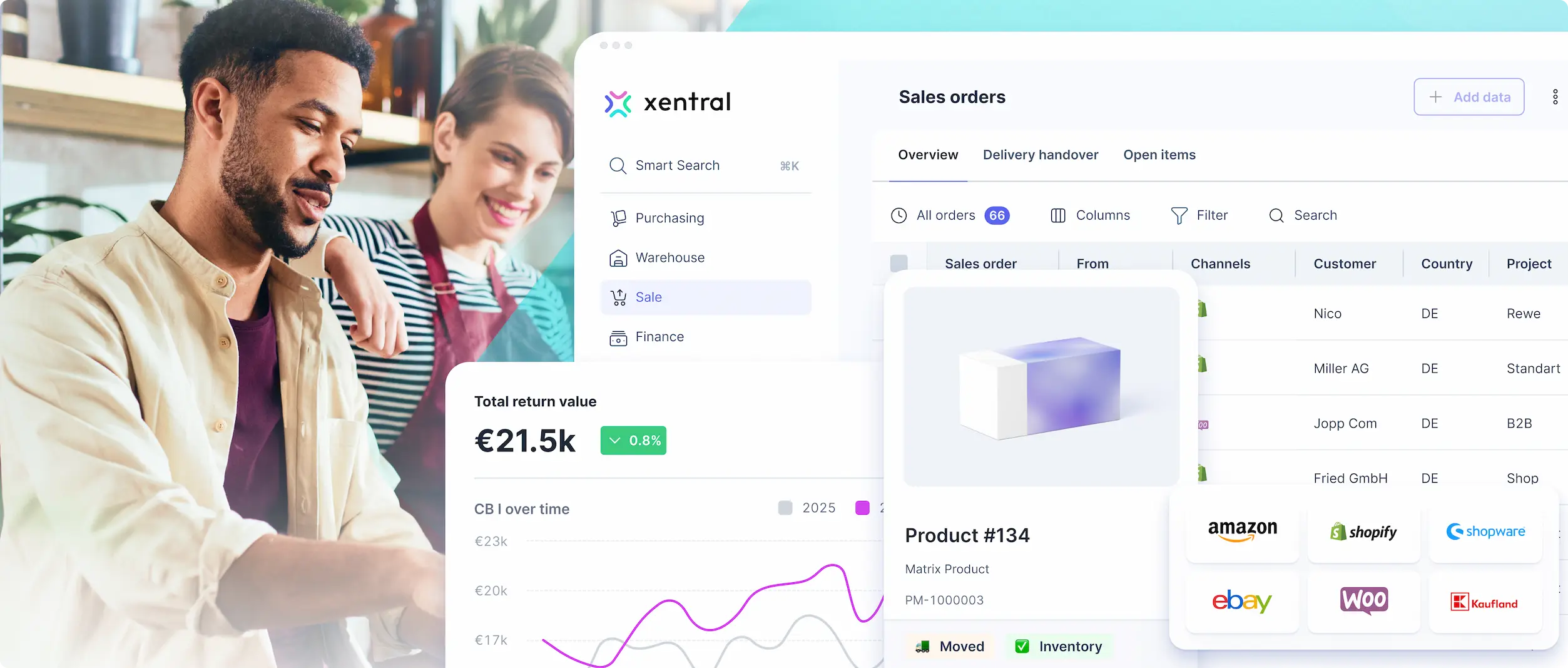
Xentral is an AI-powered ERP used by 2,000+ businesses to run their commerce operations end-to-end – orders, inventory, finance, logistics, fulfilment. The company raised roughly $95M across Series A (Sequoia Capital’s first European investment, with Visionaries Club and Freigeist) and Series B ($75M from Tiger Global and Meritech).
I joined in January 2020 as a Product Design Consultant, moved into a full-time Senior UX Designer role two months later, and have led the work as Principal UX Designer since October 2023. Across six years, I have shaped onboarding, multiple core modules, the design system, the company-wide terminology convention, and the Xentral Flows Editor – the agent-first workflow capability that lets non- technical users automate their business operations without writing code.
Keywords:
– Agentic UX
– AI workflow design
– Principal UX Designer
– B2B SaaS
– ERP · Commerce operations
– System-level interaction models
– Design system
– Mentoring & process
– Multi-round investor pitch
The challenge
ERP is the hardest domain in B2B software. Every module – orders, inventory, finance, fulfilment, logistics – has its own logic, its own user, and its own legacy. Most ERPs cope by exposing all the complexity. The opportunity at Xentral was to invert that model: let AI and automation handle the routine, surface the decisions that actually matter, and make the handoff between the agent and the human invisible to the end user. That meant defining the agentic boundary across the whole product – not feature by feature.
My Role
I lead UX and product direction across an AI-powered ERP used by 2,000+ businesses — defining where AI operates autonomously, where humans intervene, and how to make that handoff invisible to the end user.
– Lead UX and product direction across an AI-powered, data-heavy ERP used by 2,000+ businesses – orders, inventory, finance, fulfilment, and logistics on one product.
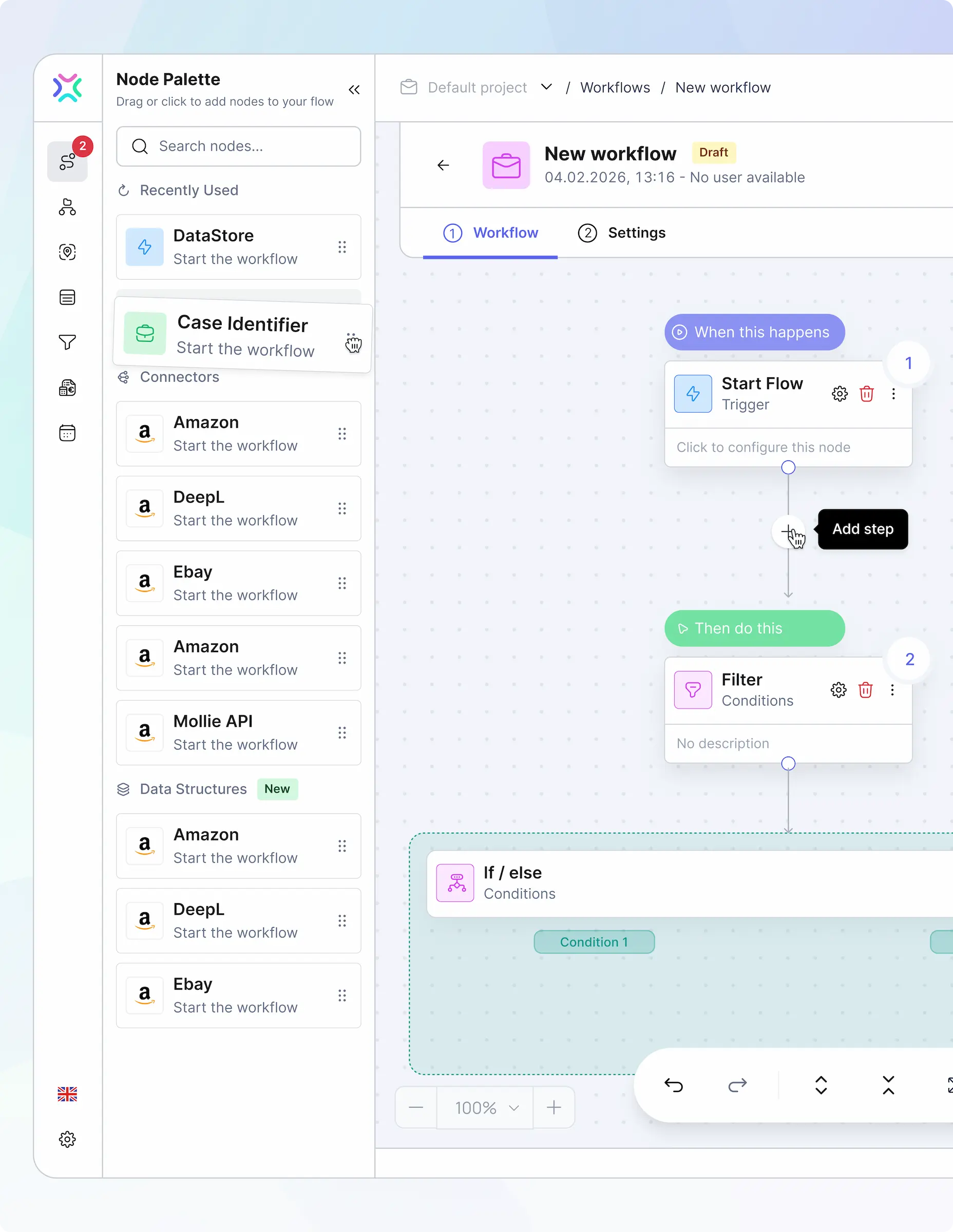
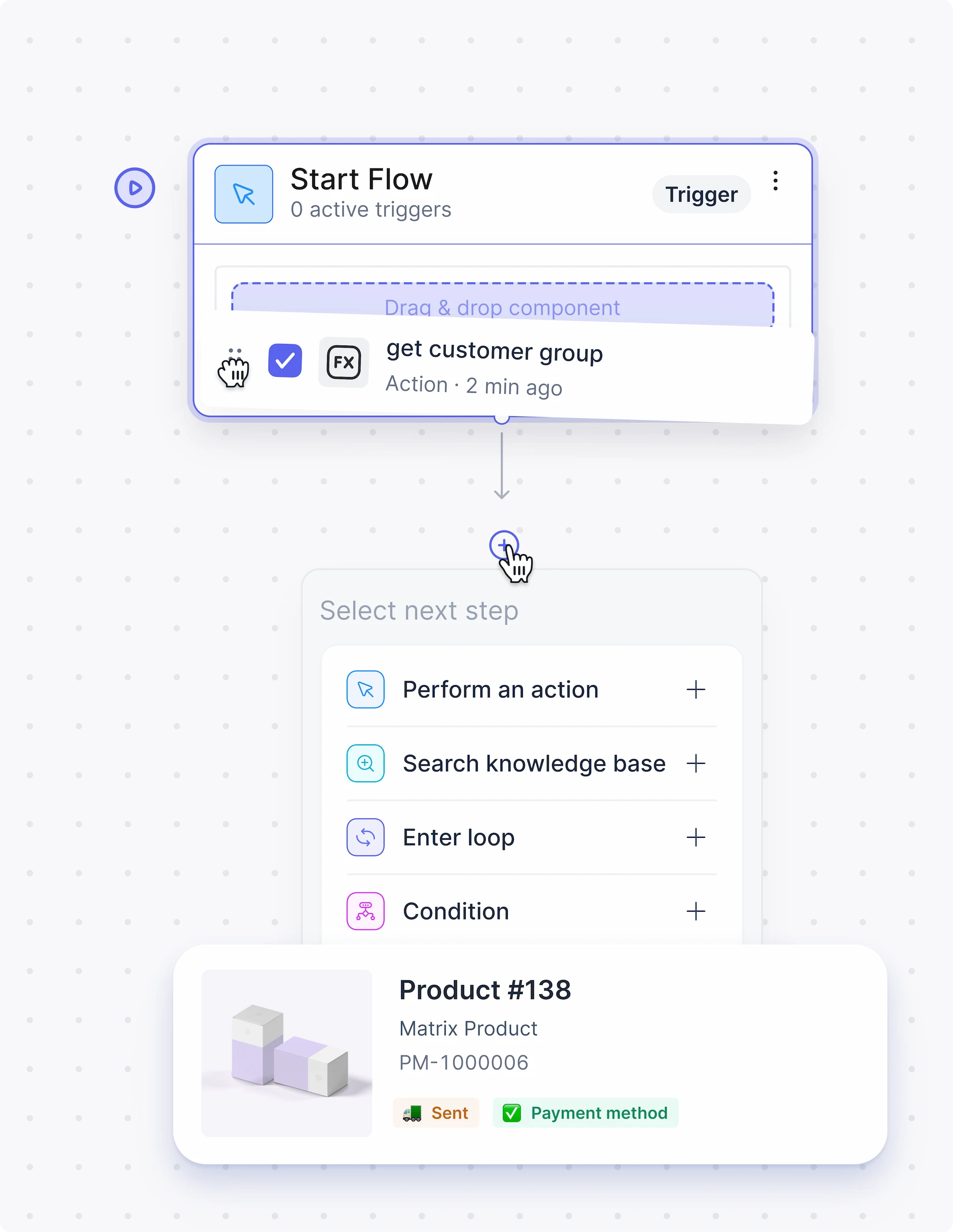
– Architected the Xentral Flows Editor – a no-code, drag-and-drop builder for AI-assisted business workflows. Defined where the agent acts autonomously, where the human approves, and how the handoff is expressed in the interface.
– Defined system-level interaction models and behaviour across complex domains – orders, inventory, finance, and fulfilment – so the same business object reads and behaves the same in every module.
– Redesigned onboarding into a module-by-module training flow that teaches users their ERP one workflow at a time, instead of overwhelming day one.
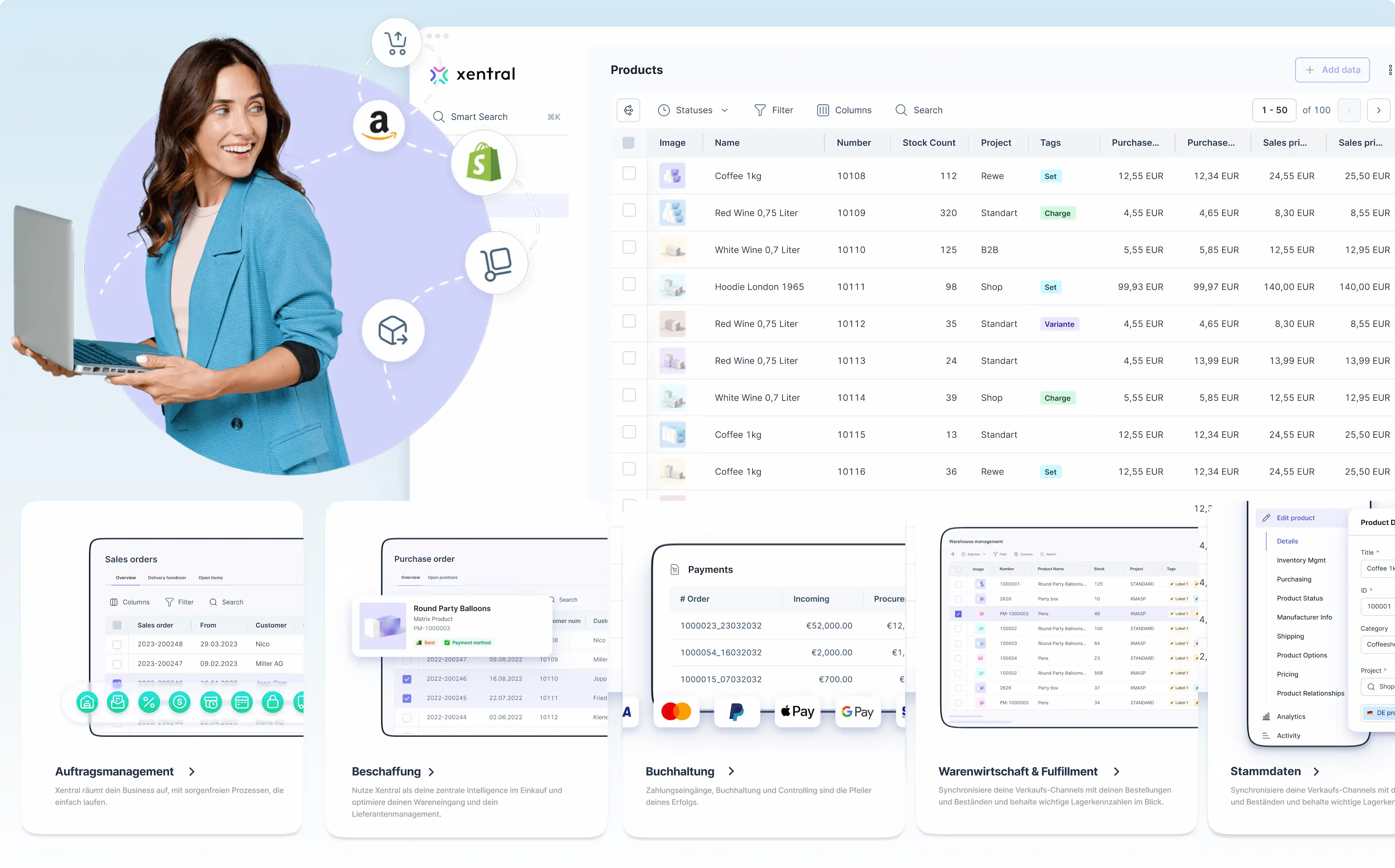
– Drove dozens of iterations on tables across logistics and accounting modules – the part of ERP UX where information density either enables or destroys daily work.
– Created the Xentral “Term convention” – a cross-product naming and language system that unified how every module describes the same business object, simplifying communication across product, design, engineering, and customer success.
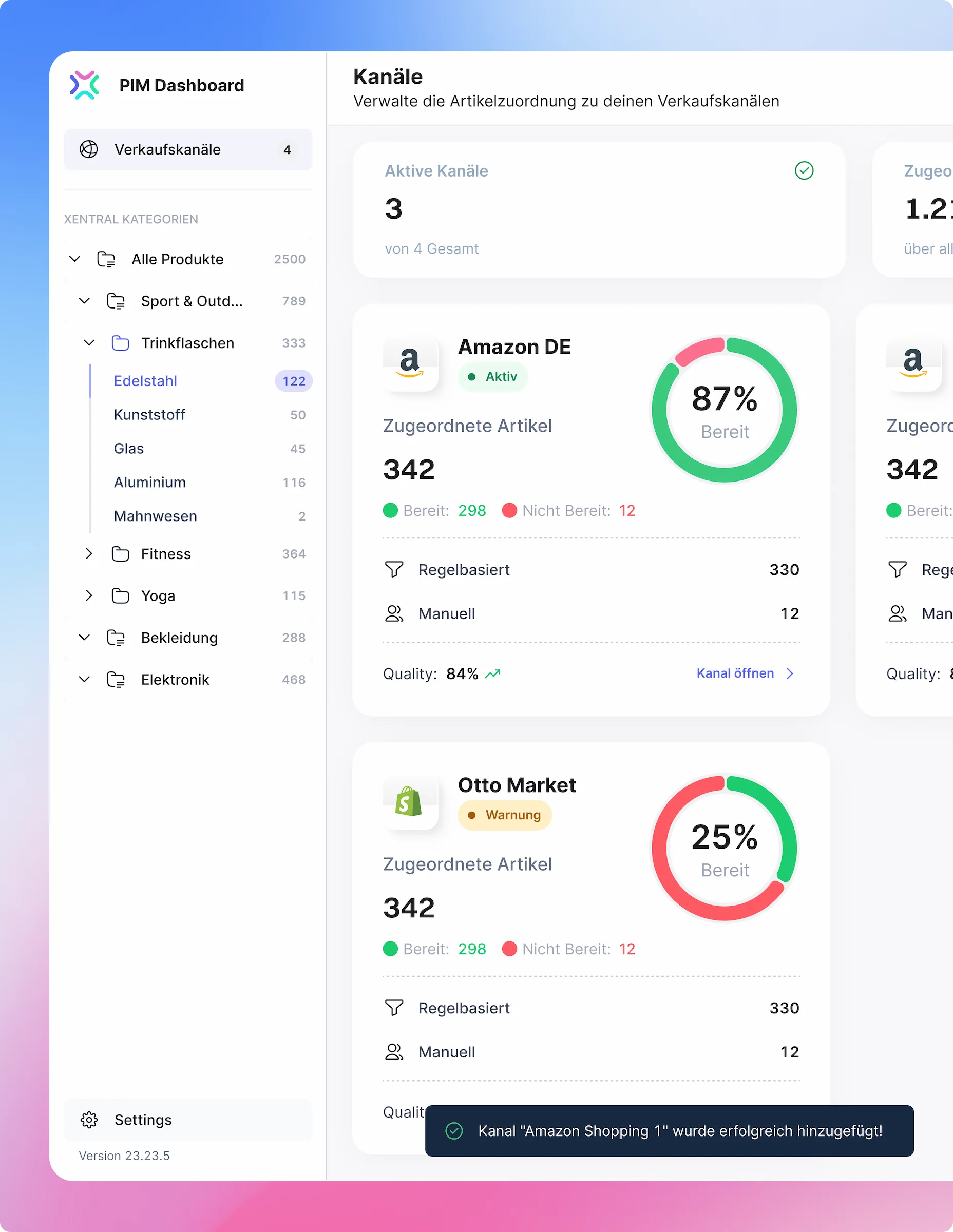
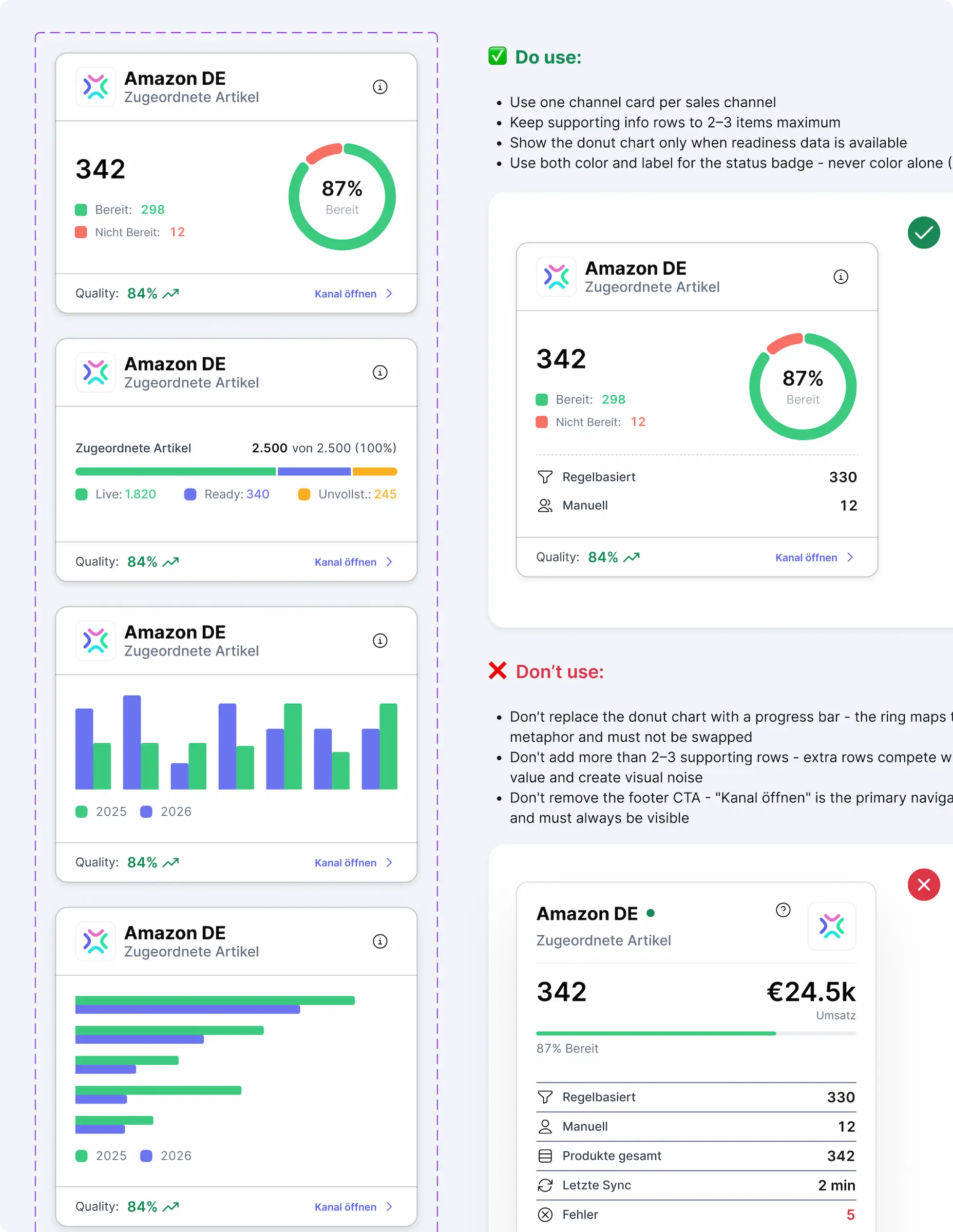
– Architected UX for a multi-channel feed management dashboard – navigation models, filtering systems, and AI-assisted product data workflows. Established UX foundations in undefined product areas, introduced reusable patterns and system – wide consistency.
– Mentor designers and promote systems thinking across the team – establishing the rituals and reviews that let the design org scale with the product.
– Partner with product and engineering to translate complex business logic into scalable, consistent product architecture.
– Shaped product direction through discovery, problem framing, and long-term system design – beyond individual features.
– Contributed design and product narrative to investor pitch materials across Series A (Sequoia, Visionaries, Freigeist) and Series B ($75M, Tiger Global + Meritech) – translating product progress into the strategic story.
Impact
“In an ERP, the user doesn’t have time to learn the system. The system has to learn the work. Agent-first design isn’t about replacing the user – it’s about removing the work that wasn’t theirs to begin with.”
Key Screens
Xentral Flows Editor (agent-first)
- Drag-and-drop AI workflow builder — no code
- Trigger → condition → action → AI-assisted branch
- Human-in-the-loop checkpoints for high-stakes steps
- Execution history, error logs, and re-run controls
- Templates for common commerce automations
Goal: Let non-technical users automate their business — safely.
Onboarding, modules, and tables
- Module-by-module training tied to real workflows
- Multi-channel feed management dashboard
- High-density tables in logistics and accounting tuned for daily work
- Filtering and sorting as first-class navigation
- Term convention applied across every module
Goal: Make a complex ERP feel like a single, consistent product.
Process
Discovery & problem framing
ERP isn’t a feature backlog – it’s a system. From the start I treated the work as long-term system design: who the daily user actually is in each module, where the legacy business logic lives, and which parts of the workflow the user wishes weren’t theirs. That framing decides which work the agent should take.
Competitive research across the ERP market
Before any product direction, I ran a structured competitive audit across two tiers. On the enterprise side: SAP Business One, Oracle NetSuite, and Microsoft Dynamics 365 Business Central – heavyweight ERPs with the depth Xentral needed to match but the cost and complexity it had to avoid. On the SMB and commerce side: Odoo, Brightpearl, weclapp, and Plentymarkets – the products competing for the same daily user. For the Flows Editor specifically, I benchmarked against workflow-automation tools – Zapier, Make (Integromat), n8n, and Workato – to understand what users already expected from a no-code builder before they ever opened ours. The insight that shaped product direction: Xentral sits between heavyweight ERP and lightweight automation, and it has to feel native at both depths. The competitive map became the brief.
Defining the agentic boundary
Before any UI, I framed the agent-first model across the product: which actions the system performs autonomously (status updates, follow-up emails, reorder triggers, exception handling), which require human approval (any change to financial state, anything that touches the customer’s money), and which are pure information surfacing. That map became the spine of the Flows Editor and the per-module workflows.
Xentral Flows Editor
Designed the no-code drag-and-drop builder so a finance lead or operations manager can compose a workflow the way they’d describe it: if this happens, do that, and ask me when it matters. The agentic patterns are explicit in the UI – you can see exactly where the AI acts on its own and where it pauses for you. Where Zapier and Make optimise for inter-app glue, the Flows Editor is built around the business objects the user actually owns – orders, invoices, stock, shipments – so the language inside the editor matches the language in the rest of the ERP.
Module-by-module redesign
Onboarding rebuilt as guided per-module training. Tables in logistics and accounting redesigned through dozens of iterations – density without overload, filtering and sorting as primary navigation. Multi-channel feed management dashboard architected around the data-flow the user actually inhabits. The benchmark for table density wasn’t a design site — it was NetSuite and SAP Business One, with the explicit goal of matching their information depth at a fraction of their cognitive load.
Design system & Term convention
Built and extended the design system across the product. The Term convention is the part I’m proudest of: it’s not a glossary, it’s a system. One shared vocabulary for the business objects every module touches – so the same thing reads the same in finance, in fulfilment, and in customer success. The whole company writes and talks faster as a result.
Mentoring & process
Established systems thinking as the team’s default operating mode. Introduced reusable patterns in product areas that had none. Set the design-review cadence that scales as the product grows.
Investor materials
Contributed design and product narrative to investor decks across funding rounds — translating where the product was going into a story investors could read in five slides. The company raised Series A from Sequoia (its first European cheque), Visionaries, and Freigeist, and a $75M Series B from Tiger Global and Meritech.
Outcome & Reflection
Six years in, Xentral runs the operations of 2,000+ commerce businesses on an AI ERP that does the routine work autonomously, asks for the human at the moments that matter, and speaks one language across every module. Two successful funding rounds. An agentic workflow capability that non-technical users actually use. A design org that thinks in systems.
The lesson from six years inside an ERP: complexity is not the enemy – incoherence is. Design at the system level – the boundary between agent and human, the shared vocabulary across modules, the patterns the whole team can lean on – and the product gets easier while the team gets faster, at the same time.