Sellerise
AI-Powered Seller Intelligence
A two-sided wellness platform where AI runs the routine and clinicians keep control of the call.
Client
Competitors
My Role
Lead Product Designer – end-to-end UX, design system, Chrome Extension
Industry
B2B SaaS · Amazon Seller Tools · E-commerce Intelligence
Deliverables
Platform UX, Chrome Extension, Design System, Landing pages, Settings & Pricing
Sellerise is an all-in-one intelligence platform for Amazon sellers — combining AI-powered keyword tracking, profit analytics, review automation, and competitor research into a single dashboard. When I joined, the product had strong functionality but a critical UX problem: users were getting lost. The feature set had grown faster than the experience that connected it.
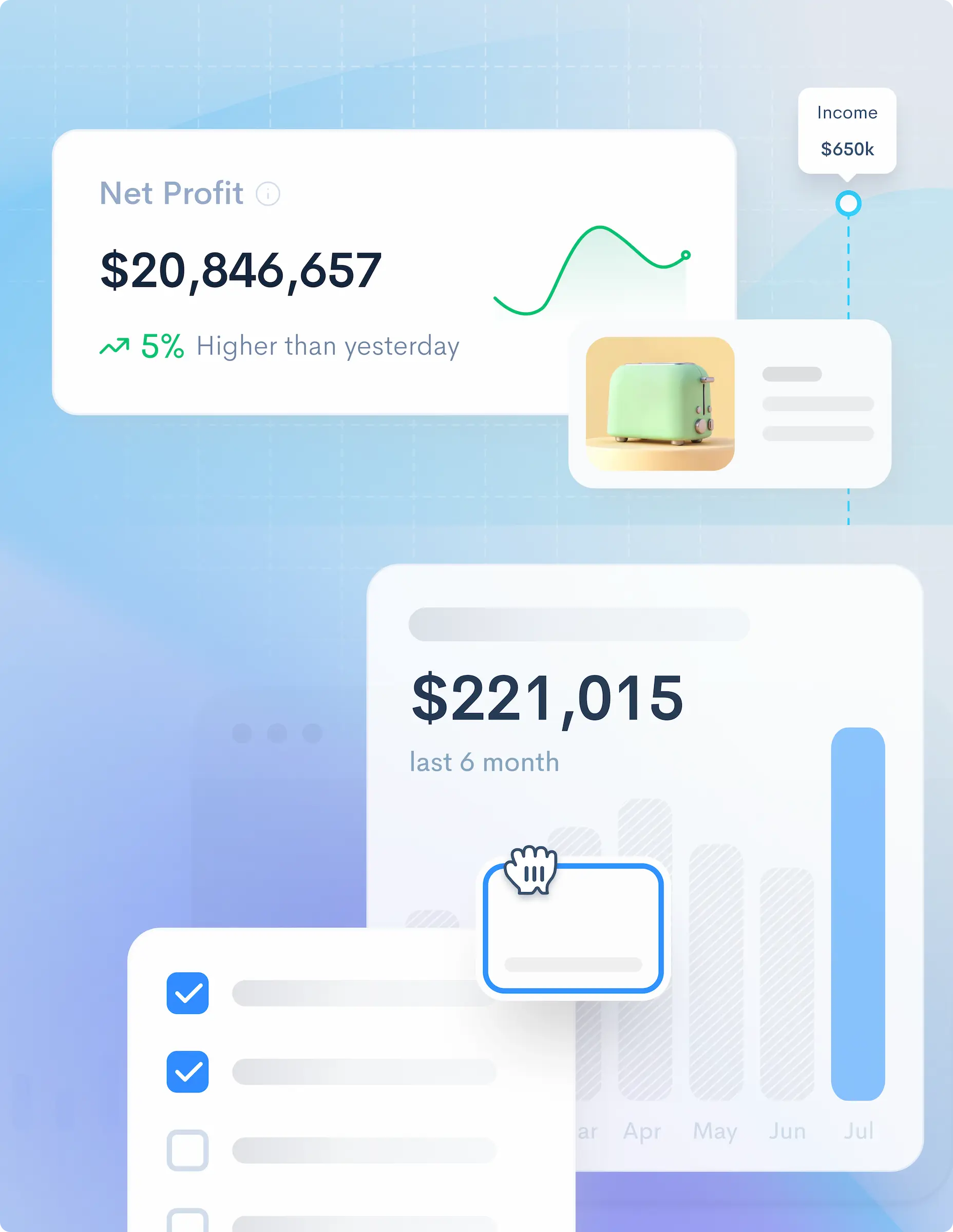
Over two years I redesigned the platform end-to-end — simplifying navigation, rebuilding the Settings and Pricing architecture, designing the Chrome Extension from scratch, and establishing a scalable design system. The result: a ~3× growth in active users, a 4.5★ rated Chrome Extension with 10,000+ installs, and measurable growth in paid plan conversions as users finally understood how pricing worked.
Keywords:
– AI-powered keyword tracking
– Chrome Web Store extension
– Trial-to-paid conversion
– Design system component library
– Information architecture
– E-commerce workflow design
The challenge
Sellerise had built an impressive feature set – keyword tracking, P&L analytics, review management, competitor research, CoGs management – but the product had grown faster than the UX that connected it. Users were landing on a dashboard that presented everything at once, with no clear entry point, no hierarchy, and no obvious path from one tool to the next.
The core problem wasn’t missing features – it was that existing features were invisible. Users couldn’t find what they needed, couldn’t understand how plan pricing was structured, and couldn’t connect individual tools into a working workflow. Complexity was hiding the product’s value.
My Role
I was brought in from Dribbble and worked as the sole Product Designer across the full platform for two years – owning UX direction, interaction design, design system, landing pages, and the Chrome Extension.
– Redesigned the core platform navigation and information architecture – reducing cognitive load and making every tool discoverable within seconds.
– Rebuilt the Settings page from the user’s mental model – restructuring overlapping categories into clear, task-based sections.
– Redesigned the Pricing page with transparent plan breakdowns and tool-by-tool feature visibility — directly improving paid plan conversion.
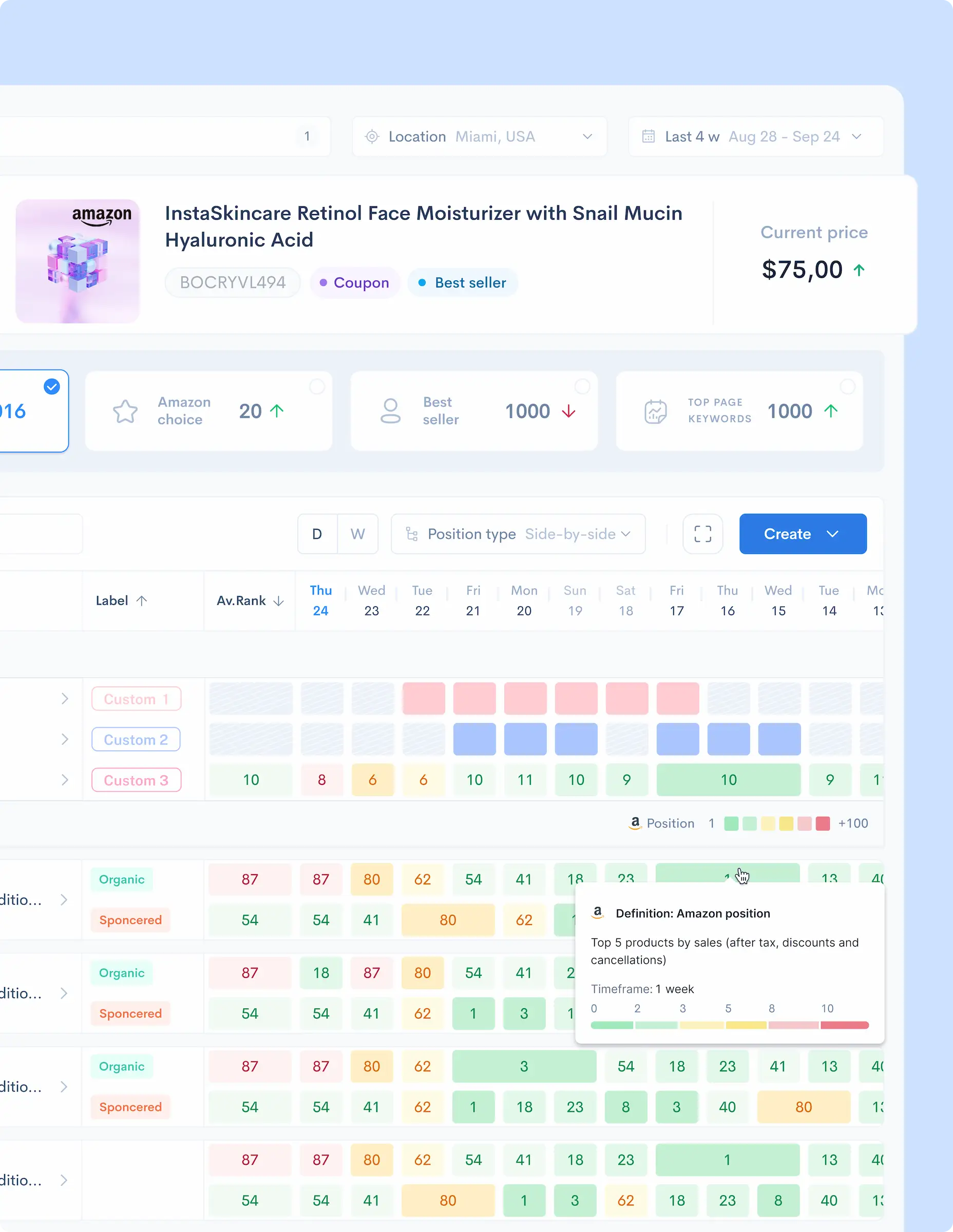
– Built the Chrome Extension from scratch – based on competitive research including Helium 10 – delivering AI-powered product research directly in the Amazon interface.
– Designed individual landing pages for each tool in the platform, with the Chrome Extension page as the conversion centrepiece.
– Established a scalable design system with a comprehensive component library – multiple variants, states, and responsive patterns – reducing design-to-dev friction across every sprint.
– Designed the CoGs Management System – mapping unfamiliar Amazon seller terminology into a clear, step-by-step cost-of-goods workflow.
– Shipped 10+ major features including Keyword Tracker, SQP Dashboard, MCP, SP Access Token, and email template system.
Impact
“Complexity isn’t a feature — it’s a liability. When users understand what a tool does and why it costs what it costs, they convert. When they don’t, they churn.”
Key Screens
Platform Core
- Dashboard — redesigned navigation & IA
- Keyword Tracker — AI-powered ranking intelligence
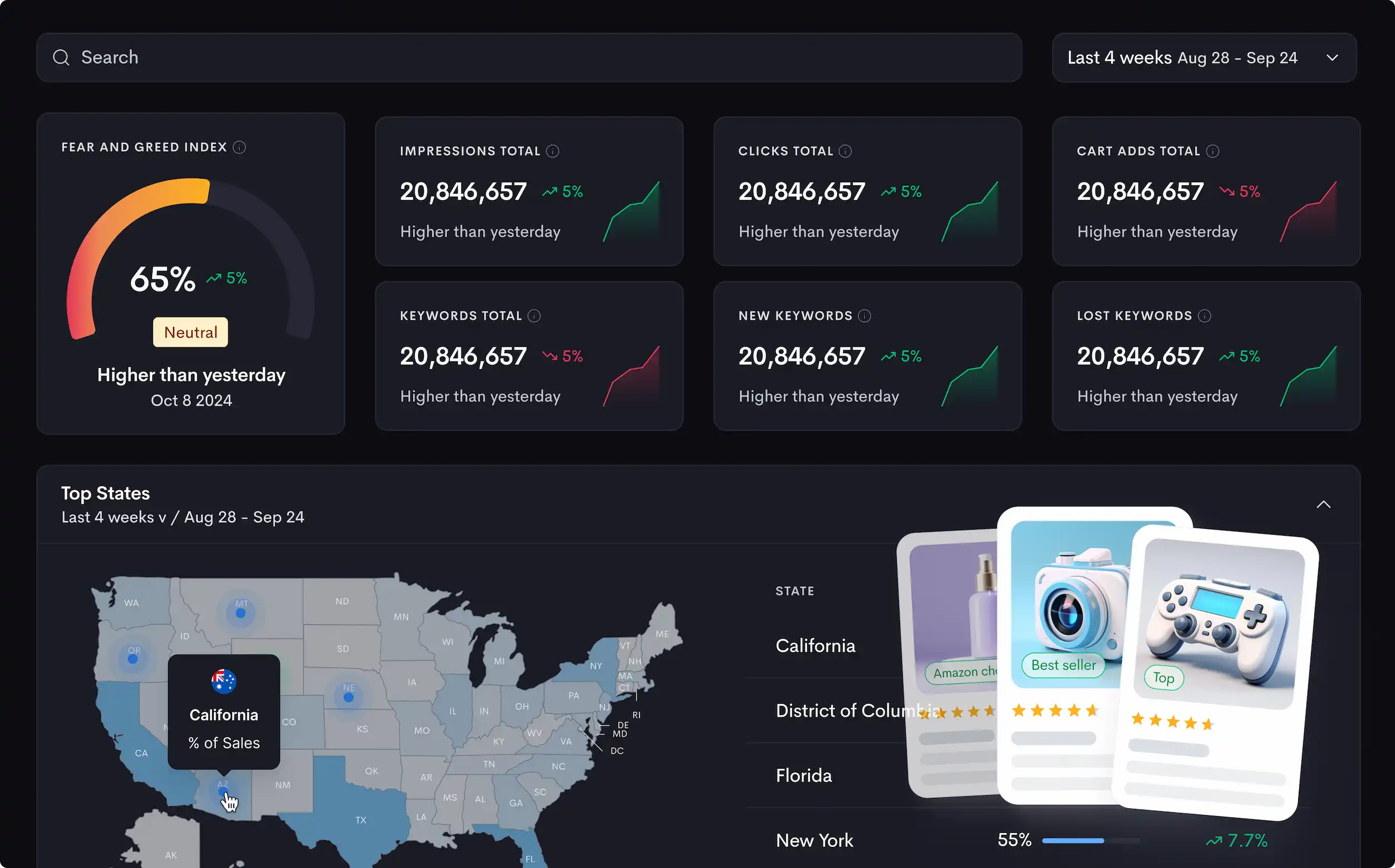
- SQP Dashboard — search query performance
- CoGs Management System
- Settings — rebuilt from task model
- Pricing page — transparent plan breakdown
Goal: make every tool discoverable and every workflow coherent.
Extensions & Growth
- Chrome Extension — built from scratch
- 10+ tool landing pages
- MCP integration UX
- SP Access Token flow
- Email template system
- Subscription & plan management
Goal: extend the product into the seller’s daily Amazon workflow.
Process
Discovery & Competitive Research
I started by mapping where users were dropping off — which features existed but weren’t being used, and which flows caused visible confusion. I ran competitive analysis across Helium 10, Jungle Scout, and Viral Launch to understand how category leaders structured complex toolsets. This research directly shaped the Chrome Extension architecture and the platform’s navigation model.
Navigation & Information Architecture
The redesigned navigation grouped tools by seller workflow stage — research, tracking, analytics, operations — rather than by feature category. This single structural change made the product feel immediately more coherent: users knew where they were, where to go next, and what each section was for. Positive reviews citing “finally understanding how to use it” started appearing within weeks of the update.
Chrome Extension — Built from Scratch
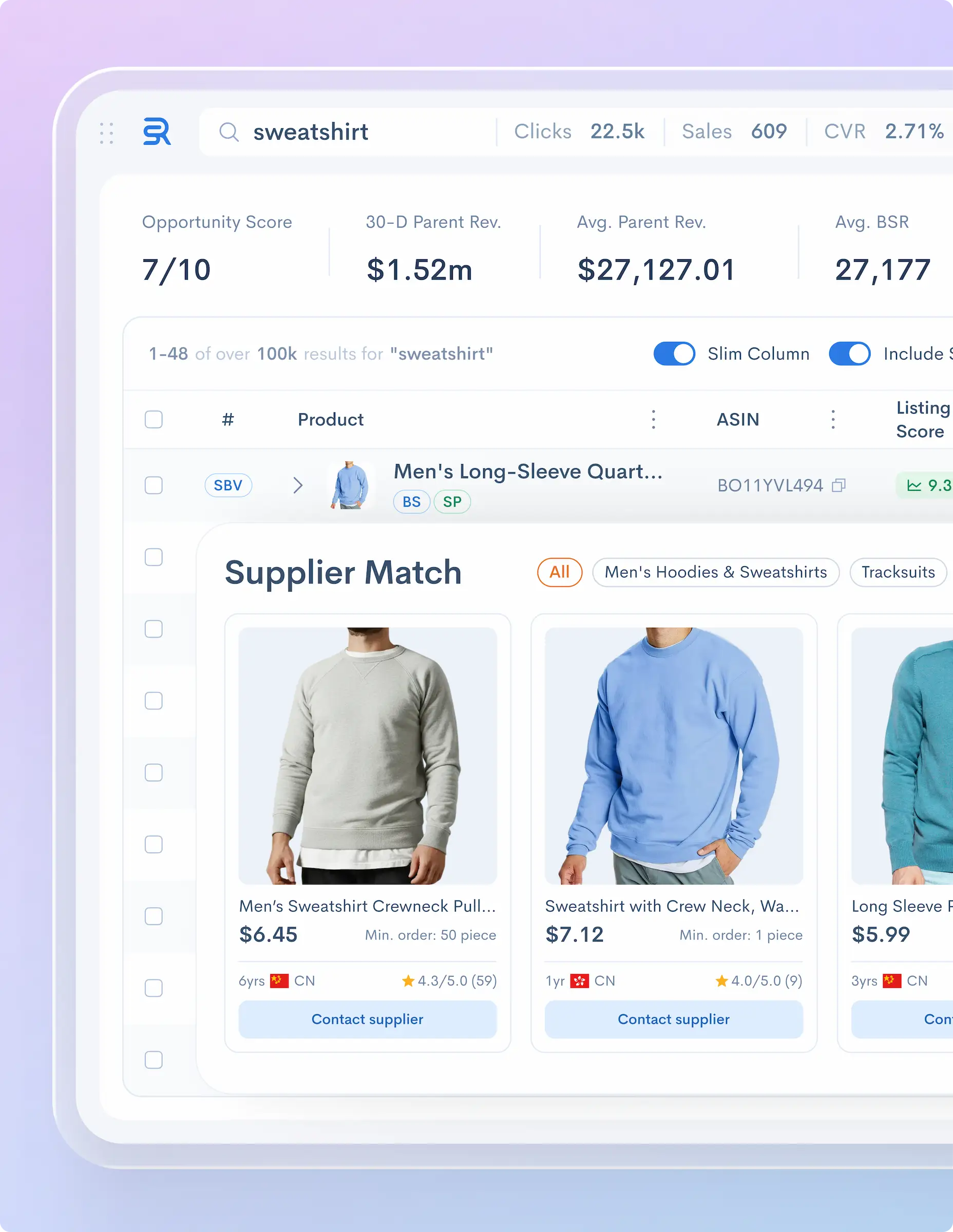
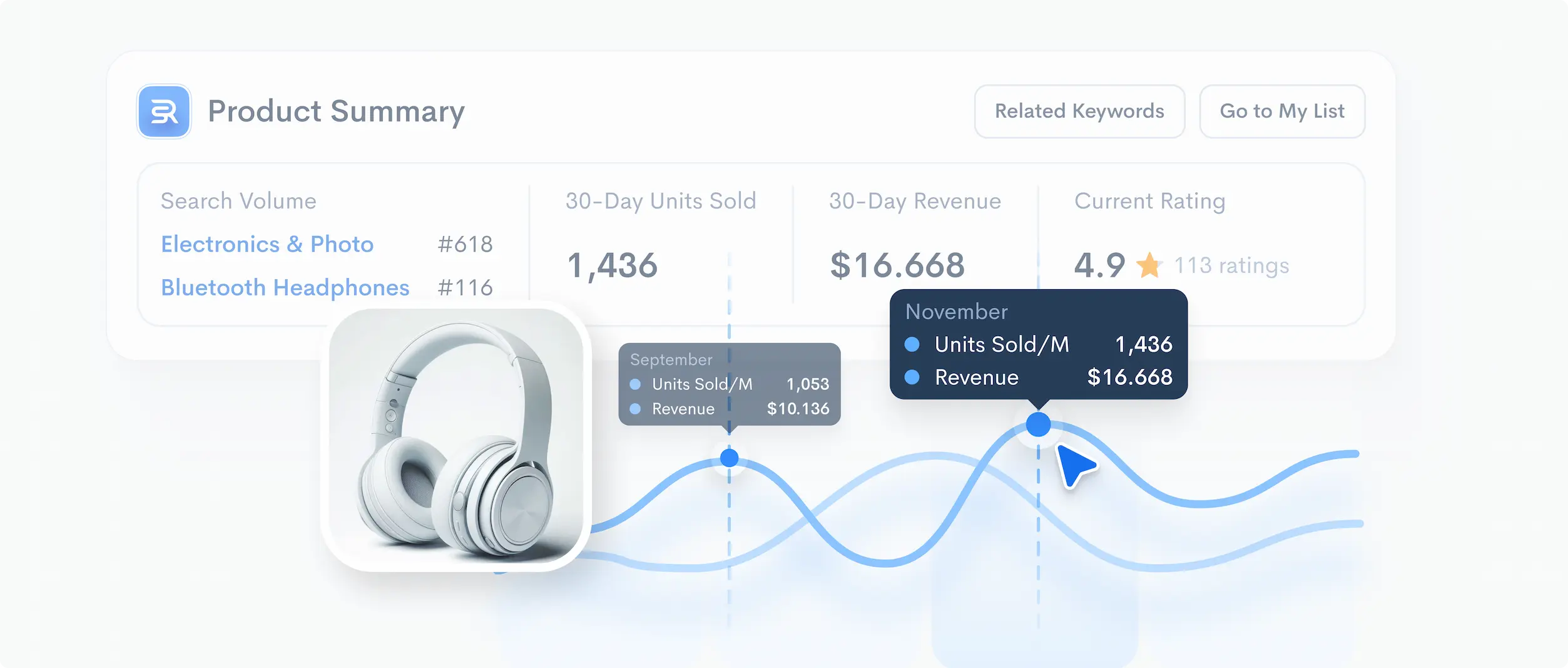
The Chrome Extension was designed from zero, with Helium 10 as the primary competitive benchmark. The core insight from research: sellers need AI-powered product intelligence without leaving the Amazon page they’re already on. I designed the extension to surface keyword data, search volume trends, competitor pricing, and estimated revenue directly in-context — making the research workflow seamless and reducing the back-and-forth between tools.
Settings & Pricing Redesign
Settings was the most structurally complex problem — multiple overlapping categories, permission levels, and account configurations crammed into a single flat list. I rebuilt it from the user’s task model: what does a seller actually need to change, and when? The result was a tabbed architecture organised by workflow context, not system logic.
The Pricing page redesign focused on one problem: users didn’t understand what they were paying for or why upgrading was worth it. I introduced a tool-by-tool feature breakdown alongside the plan comparison, making the value of each tier concrete and scannable. Paid plan conversions increased as a direct result.
CoGs Management System
Cost-of-goods management was the most domain-complex feature I designed at Sellerise. Amazon seller accounting involves layered terminology — COGS, FBA fees, referral fees, PPC spend — that most sellers track in spreadsheets. I mapped the full cost structure with the product team, built a terminology glossary as part of the design process, and designed a step-by-step input flow that guided sellers through cost attribution without requiring accounting knowledge.
AI & Keyword Intelligence
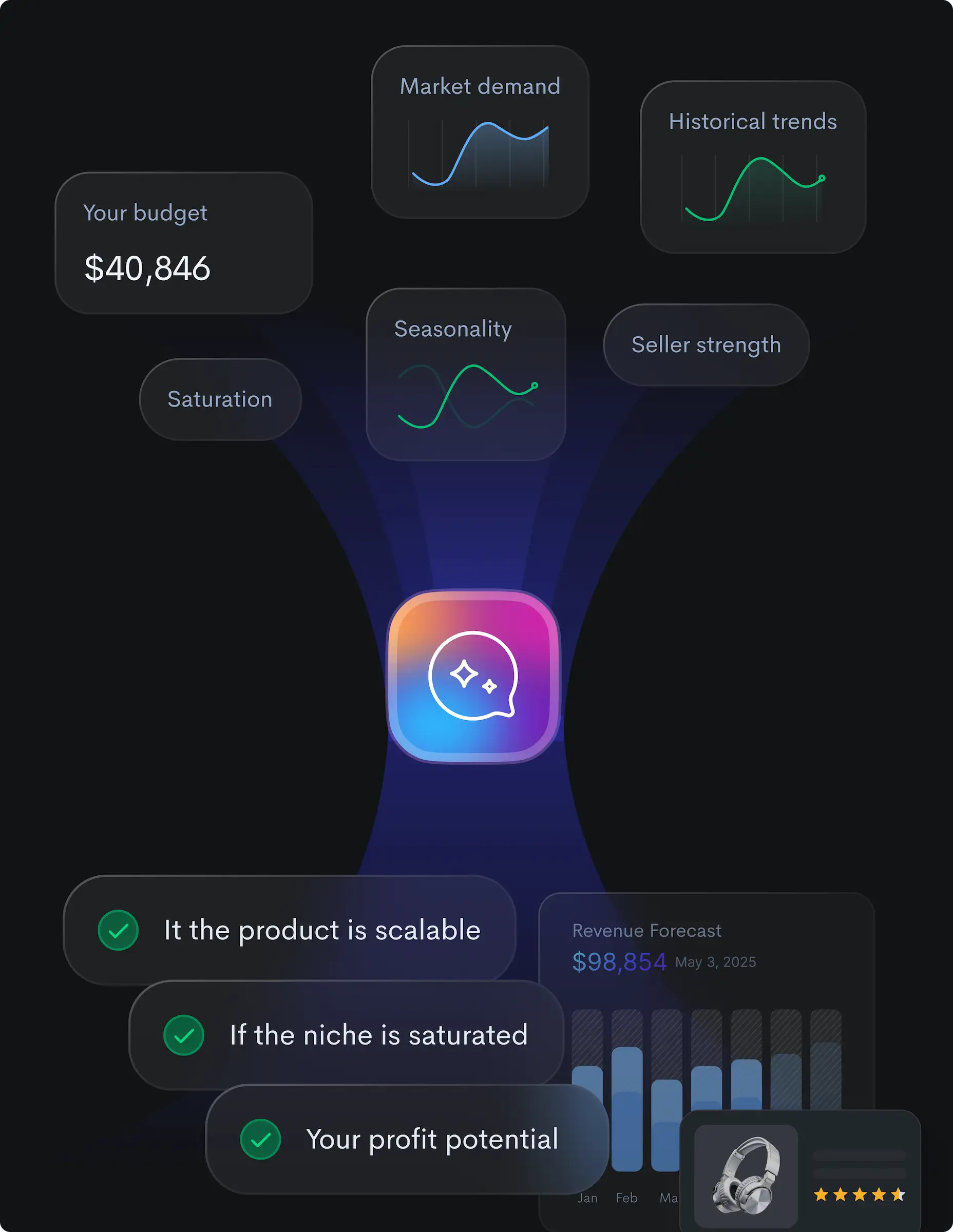
The Keyword Tracker and SQP Dashboard were built around AI-assisted data — surfacing search query performance, keyword ranking shifts, and opportunity signals automatically. I designed the data visualisation layer to make these AI-generated insights immediately actionable: not just showing numbers, but showing what to do about them. This became a key differentiator in user reviews and in the Chrome Extension’s market positioning.
Design System
I built a comprehensive component library covering the full platform — buttons, forms, tables, charts, modals, empty states — each with multiple variants and interaction states. The system reduced design-to-dev handoff friction significantly across the two-year engagement and enabled faster iteration on new features without visual inconsistency.
Outcome & Reflection
Over two years, Sellerise grew from a feature-rich but hard-to-use tool into a coherent platform that sellers recommend to each other. The Chrome Extension became a standalone growth channel — 10,000+ installs and a 4.5★ rating on the Web Store. Paid plan conversions improved as users finally understood what they were buying. And the design system meant that new features shipped faster and looked consistent without requiring a designer in every decision.
The biggest lesson from this project: in complex B2B tools, the UX is the product strategy. Every tool Sellerise built was genuinely useful — the design work was about making that usefulness visible. When navigation is clear, when pricing is honest, and when AI-powered insights are presented in plain language rather than raw data, users don’t just stay — they upgrade and advocate.